

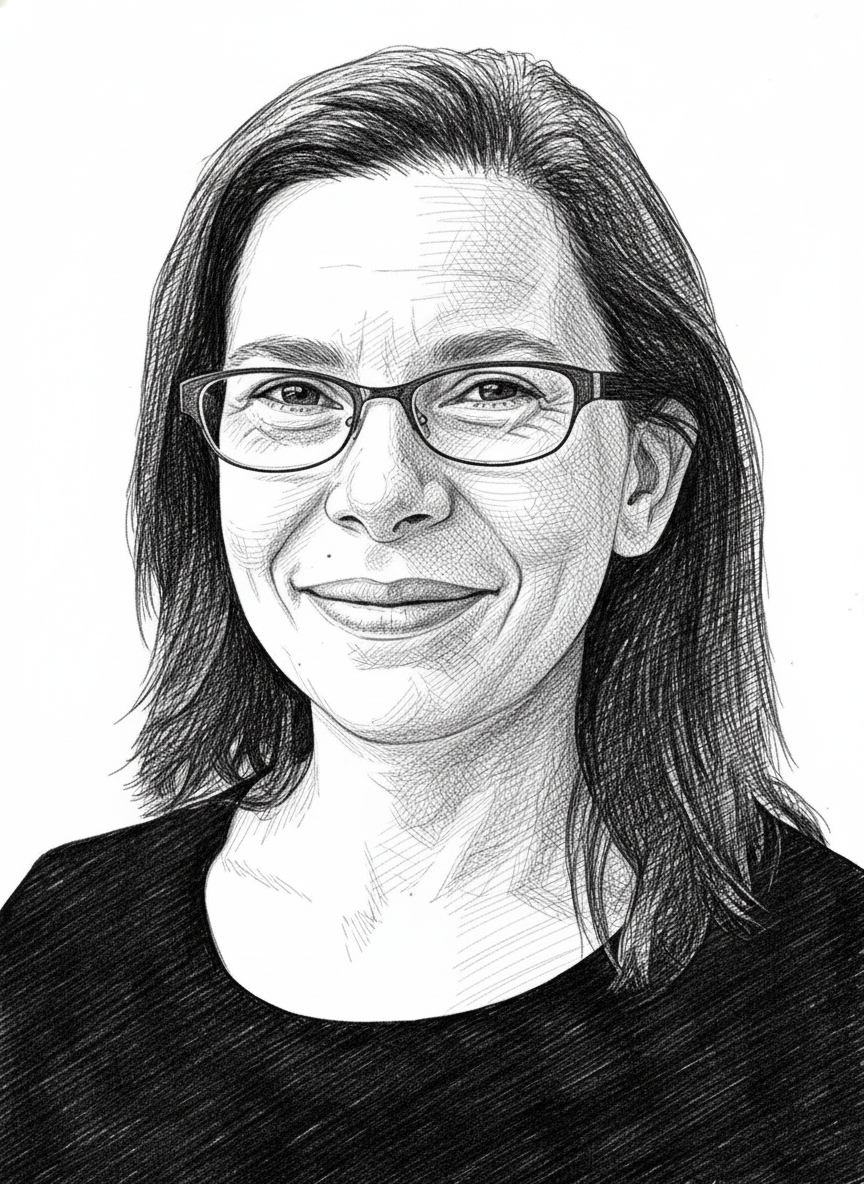
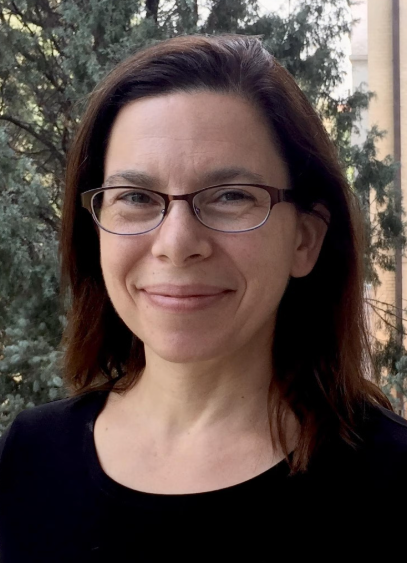
Professor Jennifer Fluri
Professor Jennifer Fluri
Geography Department Chair | Afghanistan & Geopolitics Expert
Career Highlights
- Professor & Chair, Geography Department (University of Colorado Boulder)
- Ph.D. from Pennsylvania State University
- Feminist political geographer specializing in conflict zones
- Decades of Afghanistan fieldwork and research
- National Science Foundation grant recipient
- Co-Director, CU Boulder Affordable Housing Research Initiative
- Published extensively on geopolitics, gender, and development
- Expert on militarization and humanitarian intervention
About Professor Jennifer Fluri
Professor Jennifer Fluri is Professor and Chair of the Department of Geography at the University of Colorado Boulder, where she is widely recognized for her groundbreaking work at the intersection of geopolitics, gender, conflict, and development. As a feminist political geographer, she has spent much of her career examining how war, occupation, and international intervention reshape everyday life—particularly for women—in regions marked by prolonged conflict. Her approach transforms abstract geopolitical concepts into human stories, revealing how global power dynamics affect real people in specific places.
Jennifer's scholarly and fieldwork experience is deeply rooted in Afghanistan and South/Southwest Asia, regions where she has conducted extensive research over many years. This sustained engagement has allowed her to build long-term relationships with Afghan communities, women's organizations, and local leaders, enabling her to understand how global power, militarization, and aid infrastructures affect social relations, governance, and economic survival from the inside. Her research is grounded not in brief visits or secondhand sources but in patient, on-the-ground engagement that emphasizes listening to local voices often marginalized in dominant geopolitical narratives.
What distinguishes Jennifer's approach is her commitment to understanding places like Afghanistan not as abstract "conflict zones" or geopolitical chess pieces, but as lived landscapes shaped by resilience, creativity, and human connection. She helps travelers and students move beyond simplistic narratives—whether the "graveyard of empires" trope or naive optimism about development interventions—to appreciate the complexity of societies that have endured decades of conflict while maintaining rich cultural traditions, sophisticated survival strategies, and diverse perspectives on their own futures.
Professor Jennifer Fluri is Professor and Chair of the Department of Geography at the University of Colorado Boulder, where she is widely recognized for her groundbreaking work at the intersection of geopolitics, gender, conflict, and development. As a feminist political geographer, she has spent much of her career examining how war, occupation, and international intervention reshape everyday life—particularly for women—in regions marked by prolonged conflict. Her approach transforms abstract geopolitical concepts into human stories, revealing how global power dynamics affect real people in specific places.
Jennifer's scholarly and fieldwork experience is deeply rooted in Afghanistan and South/Southwest Asia, regions where she has conducted extensive research over many years. This sustained engagement has allowed her to build long-term relationships with Afghan communities, women's organizations, and local leaders, enabling her to understand how global power, militarization, and aid infrastructures affect social relations, governance, and economic survival from the inside. Her research is grounded not in brief visits or secondhand sources but in patient, on-the-ground engagement that emphasizes listening to local voices often marginalized in dominant geopolitical narratives.
What distinguishes Jennifer's approach is her commitment to understanding places like Afghanistan not as abstract "conflict zones" or geopolitical chess pieces, but as lived landscapes shaped by resilience, creativity, and human connection. She helps travelers and students move beyond simplistic narratives—whether the "graveyard of empires" trope or naive optimism about development interventions—to appreciate the complexity of societies that have endured decades of conflict while maintaining rich cultural traditions, sophisticated survival strategies, and diverse perspectives on their own futures.
Jennifer earned her Ph.D. from Pennsylvania State University, one of the leading geography programs in the United States, where she developed her theoretical framework for understanding how space, power, and identity interact in conflict-affected regions. Since then, she has published extensively in leading academic journals and books on feminist geopolitics, security, development, and spatial justice. Her publications explore themes such as women's leadership under occupation, the politics of humanitarian aid, gendered violence, and the lived consequences of foreign intervention—topics that provide essential context for understanding contemporary Afghanistan and similar regions.
Her work has been supported by major research grants, including funding from the National Science Foundation, America's premier funding agency for scientific research. NSF support reflects peer recognition of her research's intellectual merit and broader societal impacts. This funding has enabled her to conduct the kind of sustained, methodologically rigorous fieldwork that produces genuine insights rather than superficial impressions. Her publications are frequently cited across geography, international studies, and gender studies, demonstrating the influence of her work across multiple disciplines.
Jennifer's research themes are particularly relevant for educational travelers. Her work on women's leadership under occupation illuminates how Afghan women have navigated Taliban rule, foreign occupation, international development programs, and ongoing conflict while maintaining agency and building organizations. Her research on the politics of humanitarian aid helps travelers understand the complexities and contradictions of international assistance—how well-intentioned programs can have unintended consequences, how local actors navigate and sometimes subvert international agendas, and how power relationships shape who benefits from development interventions.
Beyond her international research, Jennifer demonstrates a broader commitment to engaged scholarship through her work in the United States. She co-directs the University of Colorado Boulder's Affordable Housing Research Initiative, partnering with local communities to address housing insecurity through research that bridges academic inquiry and real-world policy challenges. This applied work reflects her belief that geography should be both analytically rigorous and socially engaged—a philosophy that informs her approach to teaching and tour leadership as well.
As a lecturer and tour leader, Jennifer is known for her ability to translate complex geopolitical issues into clear, compelling narratives. Drawing on decades of research and field experience, she offers travelers nuanced insight into regions often reduced to headlines or stereotypes. Her talks emphasize context, empathy, and critical thinking, encouraging audiences to ask deeper questions: Why do conflicts persist? How do ordinary people survive extraordinary circumstances? What role has foreign intervention played, and what are its legacies? How do gender, ethnicity, and class shape people's experiences of conflict and development?
Jennifer's approach to understanding conflict zones combines multiple scales of analysis. At the macro level, she can explain how Cold War geopolitics, the Soviet invasion, American intervention, and regional power competitions have shaped Afghanistan's trajectory. At the meso level, she illuminates how these global forces interact with Afghanistan's ethnic diversity, tribal structures, religious dynamics, and economic systems. At the micro level—perhaps most importantly for travelers—she reveals how individual Afghans, particularly women, navigate these larger forces in their daily lives, maintaining dignity, pursuing education, building businesses, and working for peace despite enormous obstacles.
For travelers to Afghanistan, Central Asia, or other regions marked by conflict and international intervention, Jennifer provides the kind of sophisticated analysis that transforms tourism into genuine education. She helps visitors appreciate not just the visual spectacle of ancient sites and dramatic landscapes but the human stories, historical legacies, and contemporary challenges that make these places meaningful. Her feminist perspective ensures attention to women's experiences and voices, correcting the male-dominated narratives that often characterize conflict reporting and historical interpretation.
Jennifer's work embodies the principle that geography matters—that understanding how space, place, and landscape interact with politics, culture, and economics is essential for making sense of our complex world. Whether explaining how mountains shape Afghan politics, how aid flows create new power structures, how gender norms are contested and renegotiated, or how ordinary people create lives amid extraordinary challenges, Jennifer brings both scholarly rigor and genuine humanity to her interpretations, making every journey an opportunity for intellectual growth and deeper understanding.
Areas of Expertise
Regional Specializations
- Afghanistan (extensive fieldwork)
- South/Southwest Asia
- Central Asia
- Conflict-affected regions
- Post-conflict societies
- Occupation zones
- Development contexts
Thematic Focus
- Feminist political geography
- Geopolitics & conflict
- Gender & war
- Women's leadership
- Militarization effects
- Humanitarian aid politics
- Foreign intervention consequences
- Spatial justice
Professional Achievements
- Professor & Department Chair (CU Boulder)
- Ph.D., Penn State University
- NSF grant recipient
- Extensively published scholar
- Long-term fieldwork experience
- Co-Director, Housing Research Initiative
- Community-engaged research
- Expert communicator
Travel with Professor Fluri
Professor Jennifer Fluri's decades of research in Afghanistan and South/Southwest Asia, combined with her National Science Foundation-funded scholarship and expertise in feminist political geography, offers travelers an extraordinary opportunity to understand conflict-affected regions with both intellectual rigor and genuine empathy. Her approach moves beyond headlines and stereotypes to reveal the complex realities of societies shaped by war, occupation, and resilience.
As Department Chair at the University of Colorado Boulder and a widely published scholar, Jennifer brings academic excellence to educational travel while maintaining accessibility and engagement. Her focus on listening to marginalized voices—particularly women's experiences—ensures that travelers gain nuanced perspectives often missing from conventional narratives. Whether exploring Afghanistan's historical treasures, understanding Central Asian geopolitics, or appreciating the human stories behind conflict zones, Jennifer's expertise illuminates both the historical forces that shape regions and the contemporary challenges facing their people.
View All Expert LecturersBook a Tour with Professor Fluri
Interested in exploring Afghanistan and Central Asia with a leading geopolitics expert?
Call toll-free: 1-800-645-3233
Email: [email protected]